
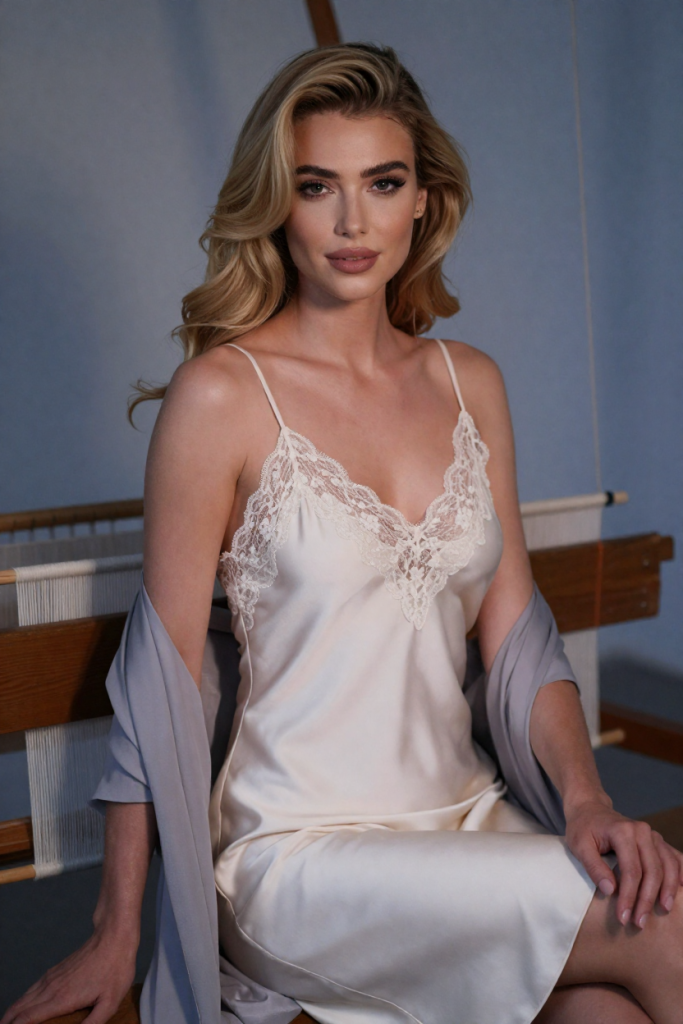
The warp on this loom is undyed and unpatterned, and that is a policy, not a shortage. A warp that arrived with its own pattern would fight every picture woven through it. The studio’s record is kept the same way: her card is written in plain factual lines — no adjectives doing the work of facts, no moods standing in for measurements — so that nothing in the record competes with the work itself.
“Elegant” is a pattern pretending to be a thread; “hair in a smooth low bun” is a thread. Prompts inherit the discipline: the card paragraph stays factual and is pasted verbatim, and all the poetry is confined to the changing line, where it can brighten a sitting without moving the woman in it.
The same plainness guards the judging. A frame is first read as cloth against the warp — does it match, line by line? Only frames that pass as true are then admired as beautiful, and only those are repaired, swapped or upscaled.
Plain warp, true cloth. The loom borrows no pattern so that the one pattern it keeps — hers, on the card — comes off the frame exact.